

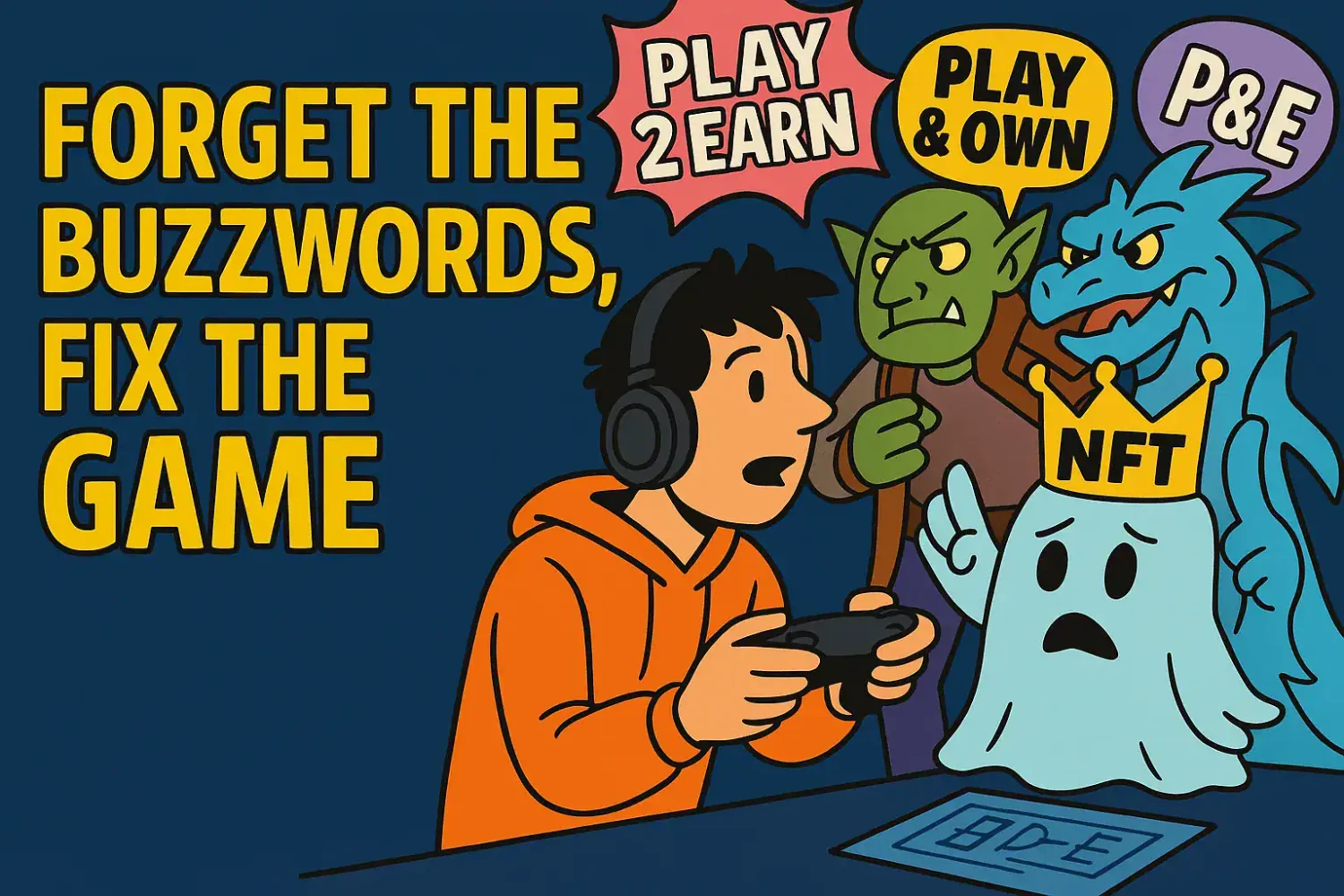
Web3 quietly retired “Play-to-Earn” and replaced it with Play-and-Own, Play-and-Earn, Play-to-Whatever. Nothing fundamental changed. Players still collect items or tokens, they still own them, and they can still sell them. Rebranding didn’t fix the core issue: too many games shipped speculation before fun.
The Semantic Shell Game
Axie’s rise-and-crash showed what happens when token emissions outrun design. After that reckoning, the industry swapped acronyms instead of systems. Calling a casino a “chance-based leisure destination” doesn’t change the experience—and players see through it.
Earning Isn’t the Enemy
“Play-to-earn” isn’t inherently broken; shallow design is. After 15,000+ hours in Entropia Universe, I’ve seen both sides: big-value loot and long dry spells—yet it stayed engaging because the loops worked. Wear-and-tear, repairs, and sinks created real friction and scarcity. Contrast that with infinite-emission economies that rewarded early entrants and left late players holding the bag. That’s not a P2E failure; it’s a design failure.
Fun Still Comes First
Too many Web3 titles launch with a whitepaper and token chart instead of a playable loop. Retention falls, airdrops follow, and the cycle repeats. Teams that focus on gameplay first—tight loops, measured scopes, delayed token launches—earn durable audiences. Ownership should enhance a great game, not compensate for a mediocre one.
Build Economies, Not Ponzinomics
Sustainable models share traits:
-
Utility-first tokens with capped or adaptive emissions
-
Clear sinks (repairs, crafting, upgrades) that match sources
-
Asset value tied to function and fun—not hype or yield
-
Tokens introduced only after the core loop retains on its own
Kill the Buzzwords, Keep the Vision
Players don’t need another acronym. They need games worth playing even if the token goes to zero. Keep the promise of ownership, but treat it as a mechanic, not the product. If people enjoy the game and can also earn, great—that’s a feature, not the core loop.
Practical Takeaways for Studios
-
Prototype the fun first; measure D1/D7/D30 before touching tokenomics
-
Ship sinks with the same rigor as rewards
-
Delay tokens until you have organic retention
-
Communicate clearly: what players own, how it persists, and what happens if servers die
At Triolith, we’re pro-ownership and anti-gimmick. Our focus is helping studios launch fun-first games with compliant, durable economies—so the work goes into the game, not the buzzwords.